
How it works
Catch your wholesale buyers,
then keep them.
One platform for everything that happens around your Shopify store — built so your customer data is always right and your team can automate the busywork.
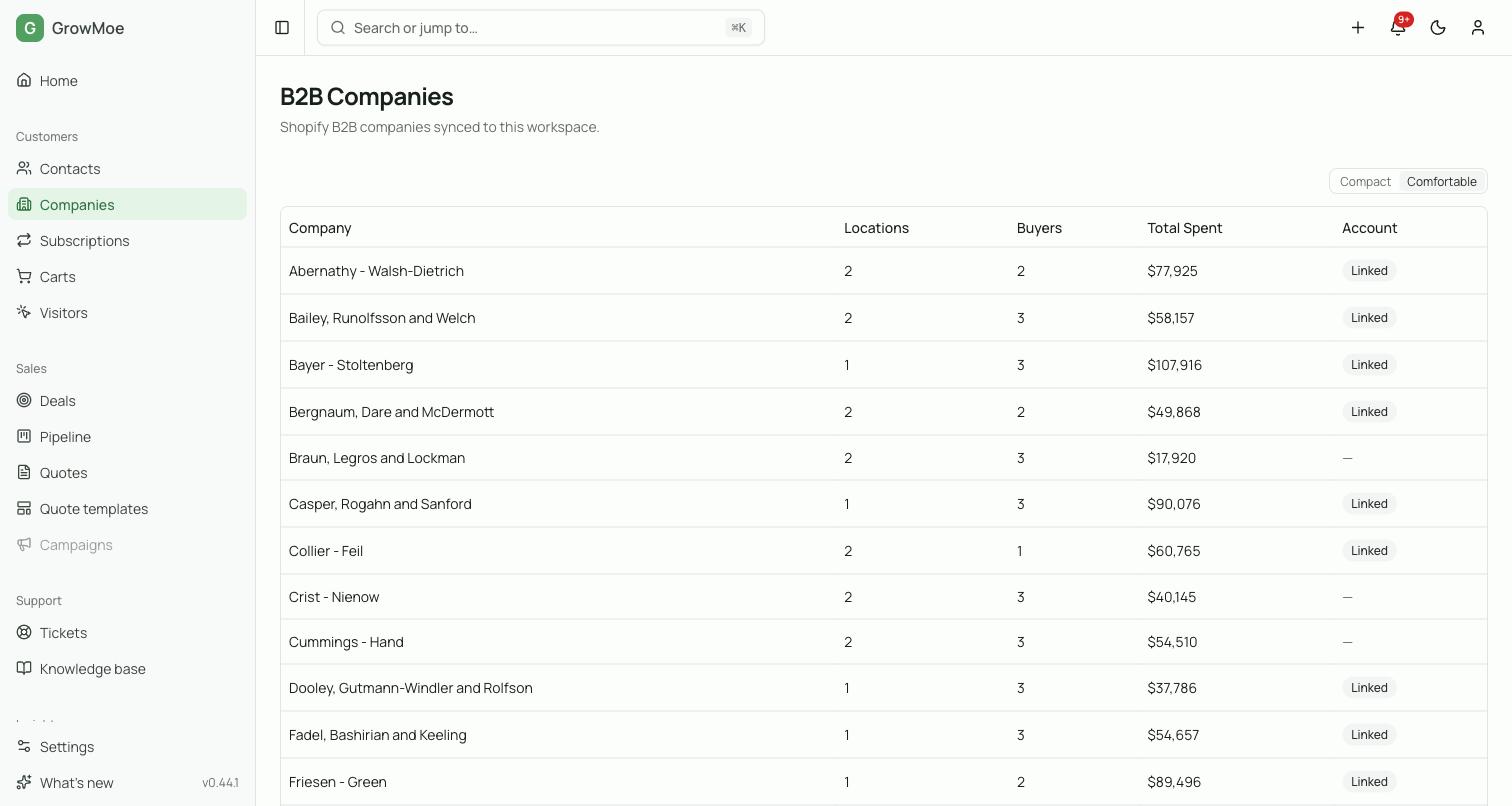
Spot the B2B buyers in your orders
A "request a quote" button you drop into your cart and product pages gives a bulk buyer a way to raise their hand instead of checking out like a one-off shopper and disappearing into DTC noise. If they're already a Shopify B2B company, they show up on your companies list from day one — synced in, not detected.
Prioritize the ones worth your time
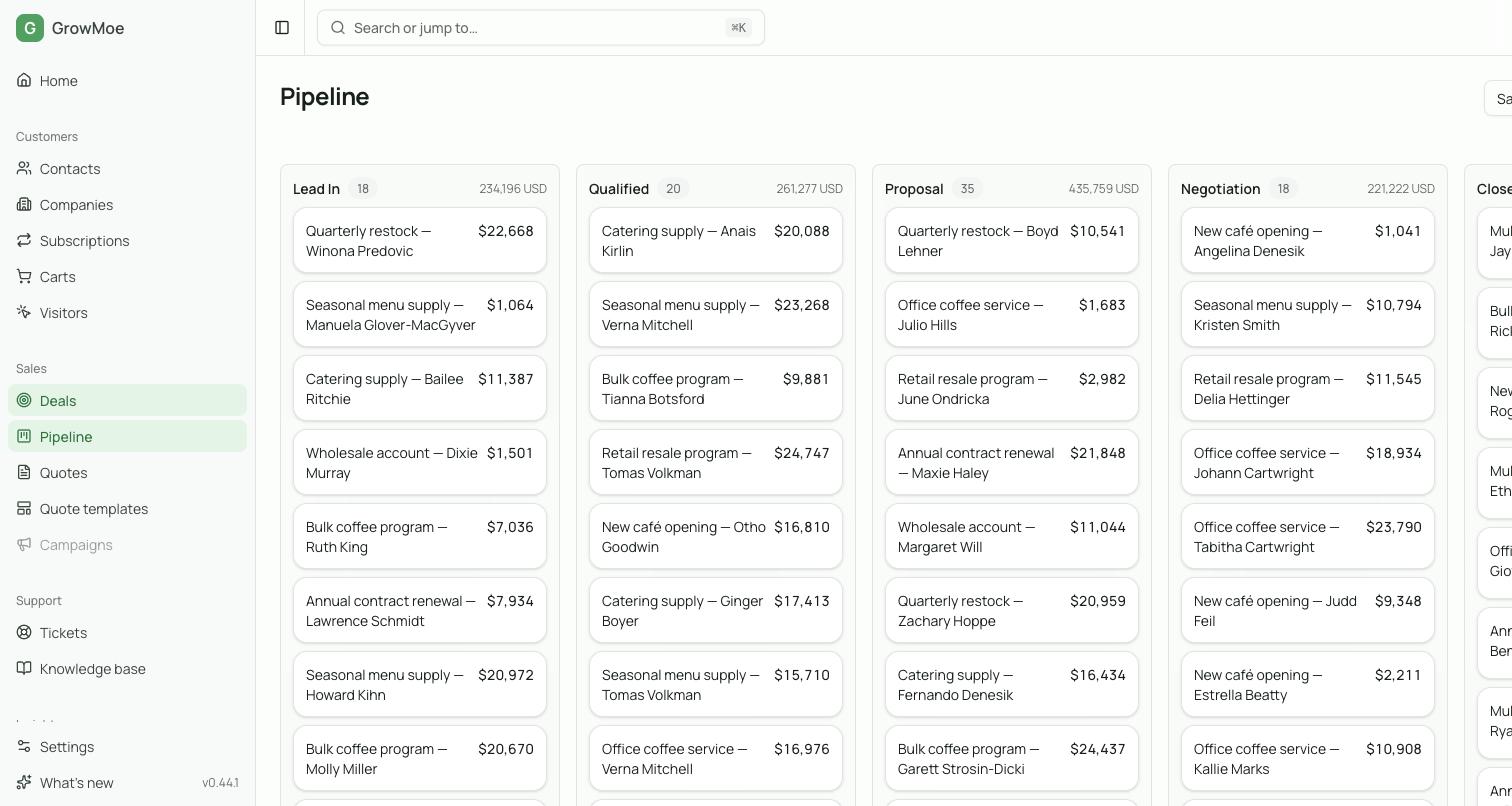
Inbound quote requests land in a queue a rep claims, and every qualified buyer goes into a B2B funnel with stages you define. You see who’s worth a call today — with the value sitting in each stage — not a spreadsheet you’ll never open.
Convert the order into an account
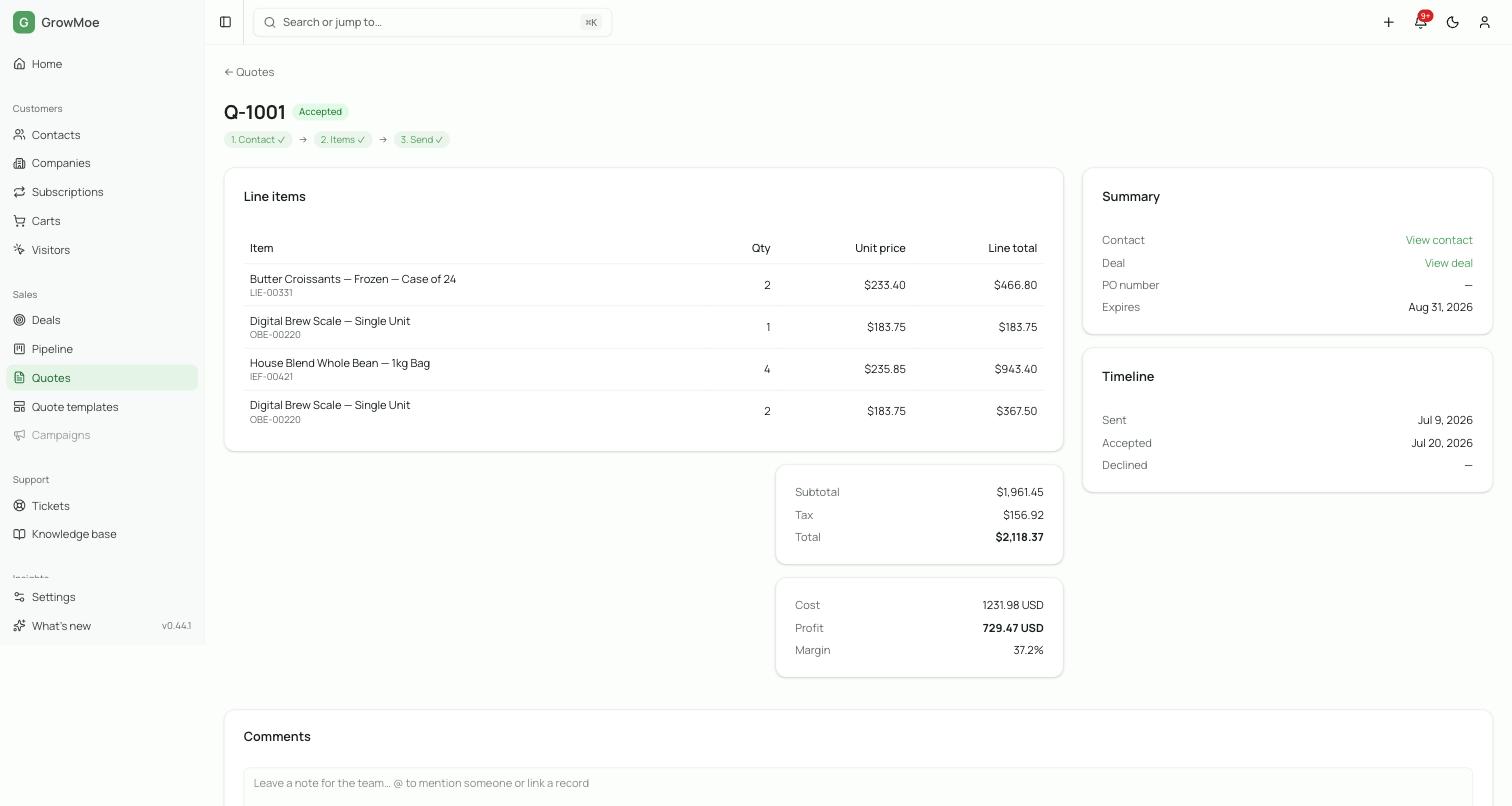
Quote them off your live Shopify catalog with cost and margin in front of you, then link the quote to their company in Shopify B2B (Plus) and publish a wholesale or tiered price list to it. The quote goes out as a Shopify-hosted invoice — the buyer pays through a normal checkout.
Keep them coming back
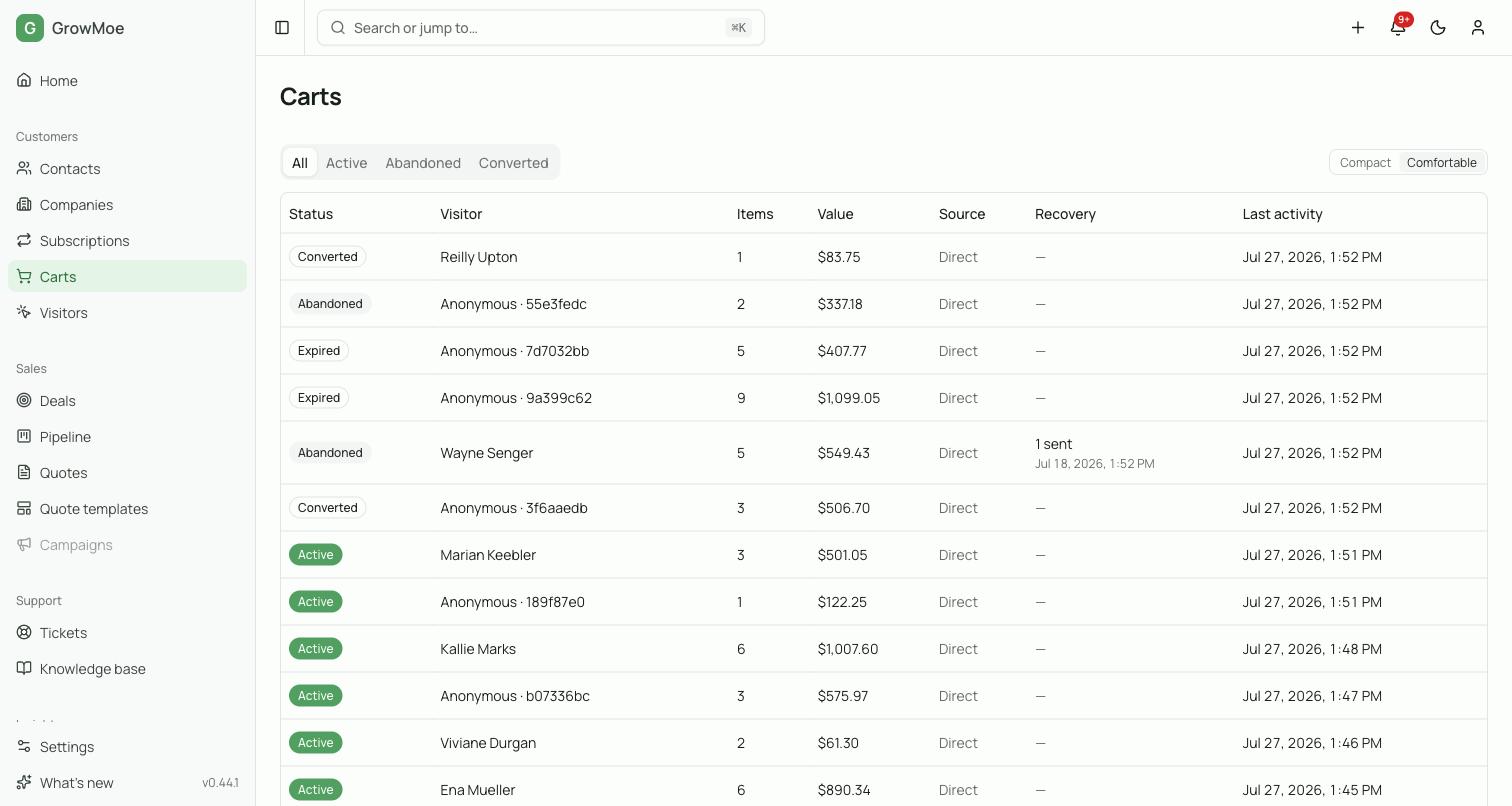
Reorders, subscriptions, support conversations and the full relationship history live against one account — so the person your agent is replying to is visibly the account that spends five figures a year.
Built right
The platform underneath.
Shopify-native, always in sync
Orders, products, customers and B2B companies flow in from Shopify and stay current automatically — no imports, no stale data. A drift check runs hourly and heals anything that fell out of step.
Automate the busywork
Build a workflow once — follow-ups, cart recovery, quote approvals — and it runs the same everywhere, including through Shopify Flow.
Yours to own, nothing locked in
Use the email, billing, and storage providers you already trust, and swap them anytime. Signed webhooks and scoped API keys let your other systems read and write directly.
Secure and multi-store by design
Every store’s data is isolated, access is role-based, and it runs on a fast global edge.